
Panasonic Has Been Made in Malaysia Since 1972 — Why It Matters
Panasonic’s Shah Alam plant has built air conditioners since 1972. What that means for price, spare parts, warranty and climate suitability.
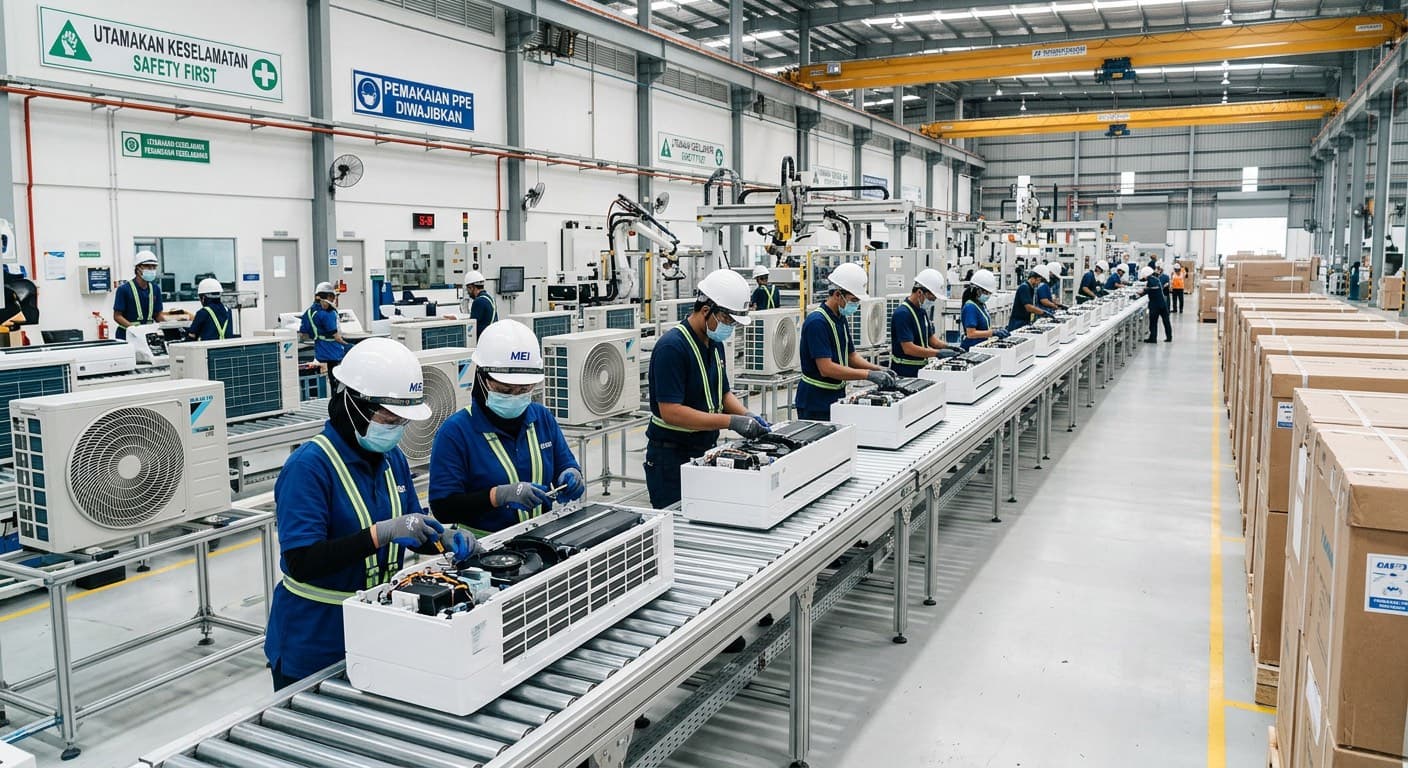
The Shah Alam Plant and Its History
Panasonic began manufacturing electrical goods in Malaysia in 1972, and the Shah Alam air conditioning plant is now one of the company’s largest production hubs in Southeast Asia.
The unit you install at home was most likely assembled in Selangor rather than imported. That fact carries a few practical consequences that rarely come up at the point of sale.
The Effect on Price
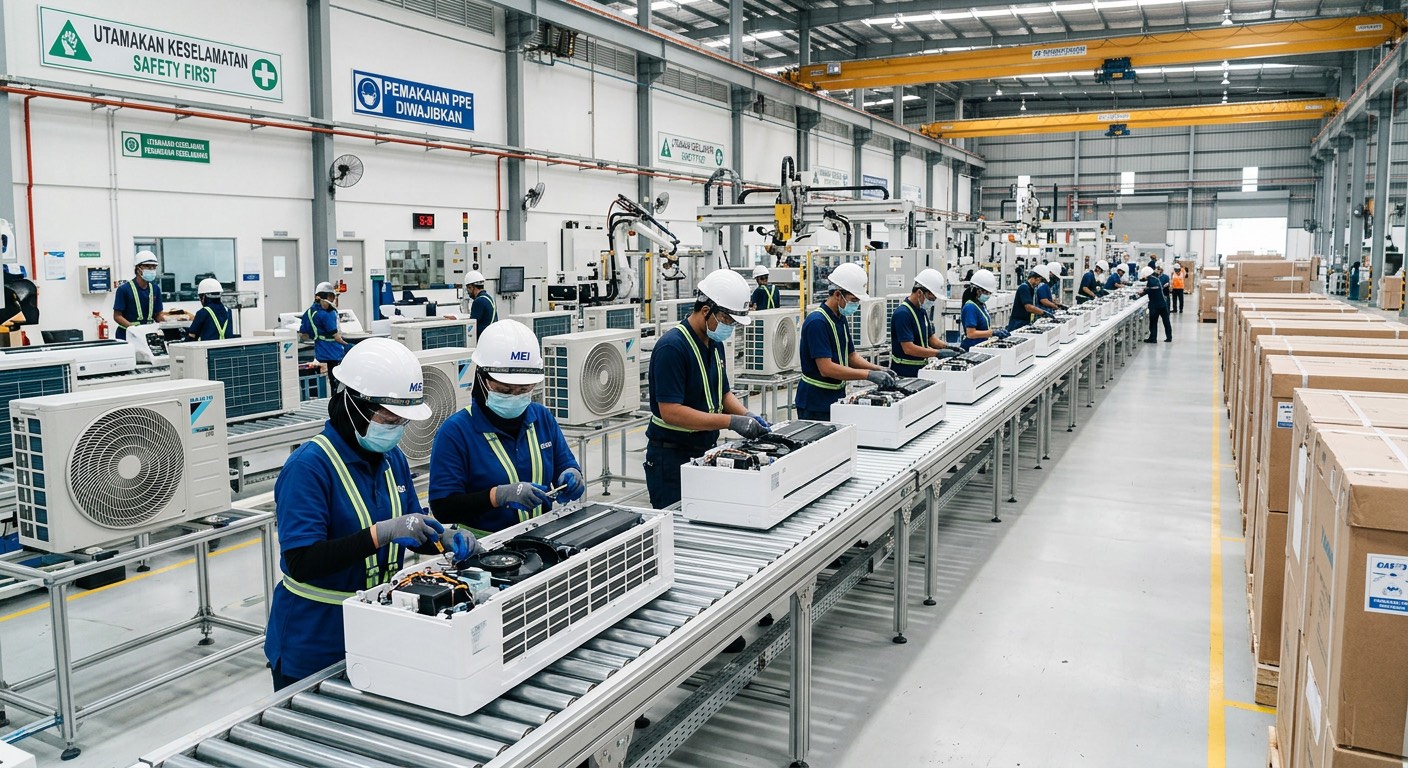
Local production means no import duty and far lower shipping costs. That is why the PN series can start at RM1,089 installed — a price that is hard to match for a brand shipping finished units in.
It also means steadier pricing. Imported brands are exposed to currency swings; the locally built Panasonic range is far better insulated from them.
Spare Parts and Warranty
- Common parts — PCB boards, fans and sensors arrive in days rather than weeks
- Warranty claims — handled in-country, with no shipping back to an overseas plant
- Wide dealer network — including Sabah and Sarawak, not just the Klang Valley
- 5-year compressor warranty — backed by a local entity
For a unit you expect to run for ten years, part availability in year eight matters more than an RM200 price difference on day one.
Built for a Tropical Climate
Units developed for the Malaysian market are tested at the humidity and temperatures we actually get, not at a European summer average. That shows up in several concrete ways.
Coil coatings are chosen to handle sustained high humidity and, on selected models, coastal salt air. Drainage is designed for a much heavier condensation load. And POWERFUL mode is tuned to cool a room that has been baking all day — the normal case in a Malaysian terrace house.